/ CIVIL · BRIDGE
Bridge Launching
Holds the coefficient of friction steady while a bridge deck is pushed out during incremental launching.
A PTFE-based low-friction layer (virgin, reinforced or graphite) physically bonded beneath a support material. It carries structures weighing tens of tonnes and lets them travel horizontally without judder — the product line Dongwoo Fluontech is known for.
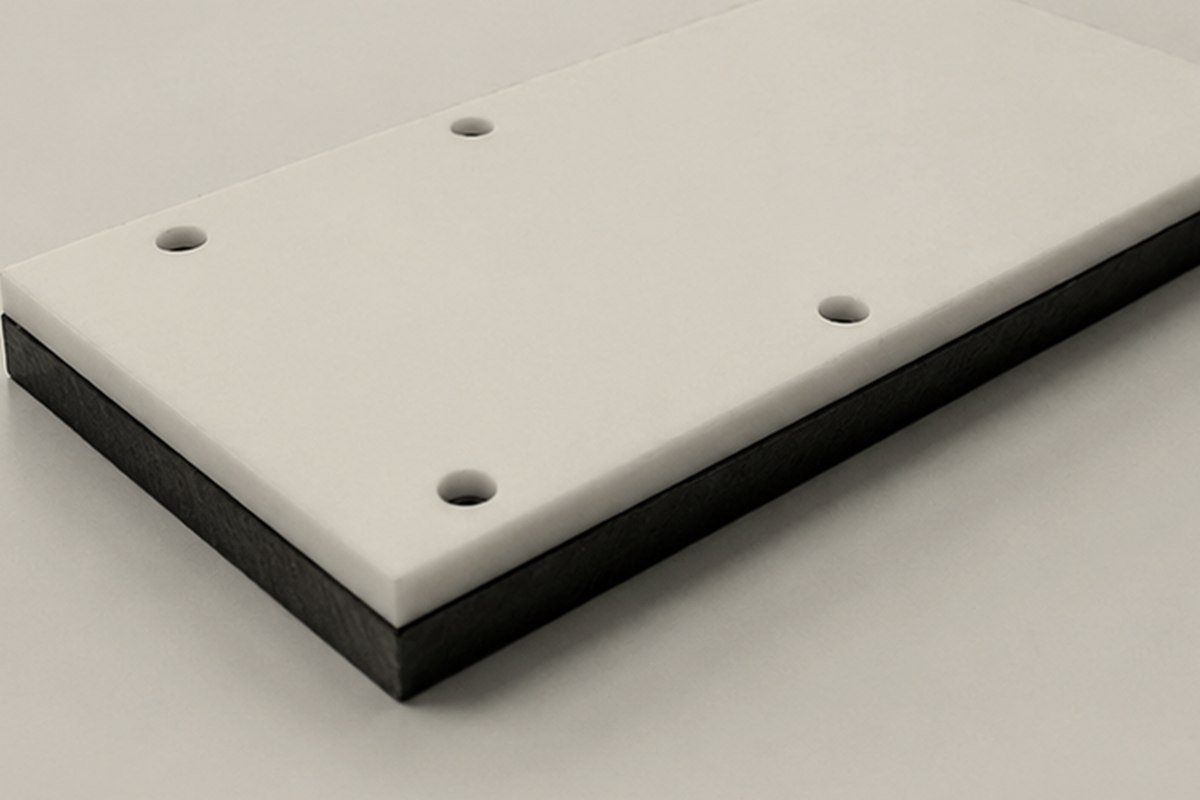
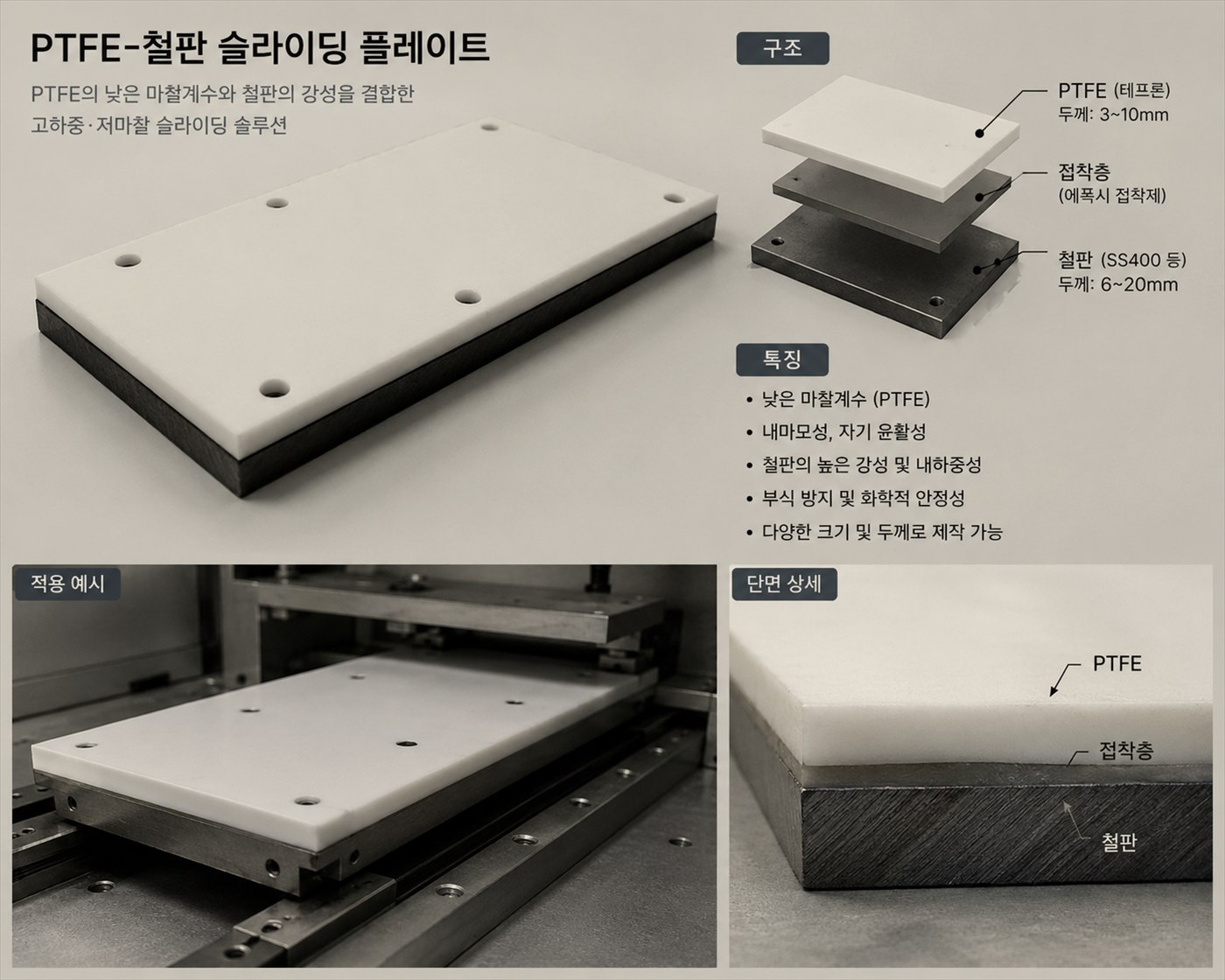
The table below describes a standard SKU. Every line is made to order against your drawing, load case and friction requirement. Ask us about special temperature or chemical duty.
| Property | Value | Note |
|---|---|---|
| Overall Length (L) | Per drawing | Machined 100–1200 mm to specification |
| Overall Width (W) | Per drawing | Custom (max. 800 mm) |
| Total Thickness (T) | Per drawing | Sum of the three layers |
| PTFE Composite Layer | Per drawing | Virgin · Reinforced · Graphite — choose one |
| Adhesive Layer | Per drawing | Thermosetting |
| Support Substrate | Per drawing | Rust-preventive treated · material to specification |
| Coefficient of Friction (μ, dry) | Per drawing | At 10 MPa, room temperature |
| Operating Temperature | Per drawing | Wide range, PTFE based |
| Max Contact Pressure | Per drawing | Static load |
| Surface Roughness (Ra) | Per drawing | PTFE sliding face |
| Chamfer | Per drawing | Prevents edge damage |
| General Tolerance | Per drawing | Where not otherwise specified |
| Approx. Weight | Per drawing | For a standard SKU |
The plate that takes the load and fixes to the structure. Rust-preventive treatment before bonding secures adhesion, and the material can be specified by the customer.
Thermosetting adhesive. Absorbs thermal expansion and damps vibration.
Holds the coefficient of friction steady while a bridge deck is pushed out during incremental launching.
Precise horizontal movement of modules weighing tens of tonnes in plants, shipyards and power stations.
Forms the sliding layer of a base-isolation system that dissipates seismic energy in buildings and equipment.